
October is one of those months when you can walk the same route twice and notice something different each time.
A tree that was green last week has started turning yellow. Seeds are gathering underneath trees. Fungi appear after damp weather. Ivy is flowering when much of the summer colour has disappeared. Birds that spent the summer much further north are starting to arrive in the UK.
For children, it is a brilliant month for nature learning because the changes are happening right in front of them.
Start with one question
What has changed since last time?
Exactly what you see will depend on where you live and the weather that year. Treat these as things to look for rather than a checklist you need to complete.
What to take with you
Very little. A paper bag or old egg box gives small fallen finds somewhere to go. A phone is useful for photographing things that need to stay where they are. A magnifying glass is lovely if you already have one. A pencil and scrap of paper are enough for drawing. And if the ground is wet, decent footwear will make the whole experience easier. You do not need to prepare an activity before you leave as October provides plenty of material of its own.
If a walk feels like too much
A nature walk does not have to involve much walking. Choose one tree. Sit on one bench. Look at one patch of ivy. Spend five minutes underneath an oak. Listen from the garden. Drop one seed. Then go home. For children who become overwhelmed by long walks, unpredictable environments or too many instructions, making the activity smaller often gives them more space to become curious. The aim is not to complete the walk, your aim is to notice something.
1. Autumn leaves: why are they changing colour?
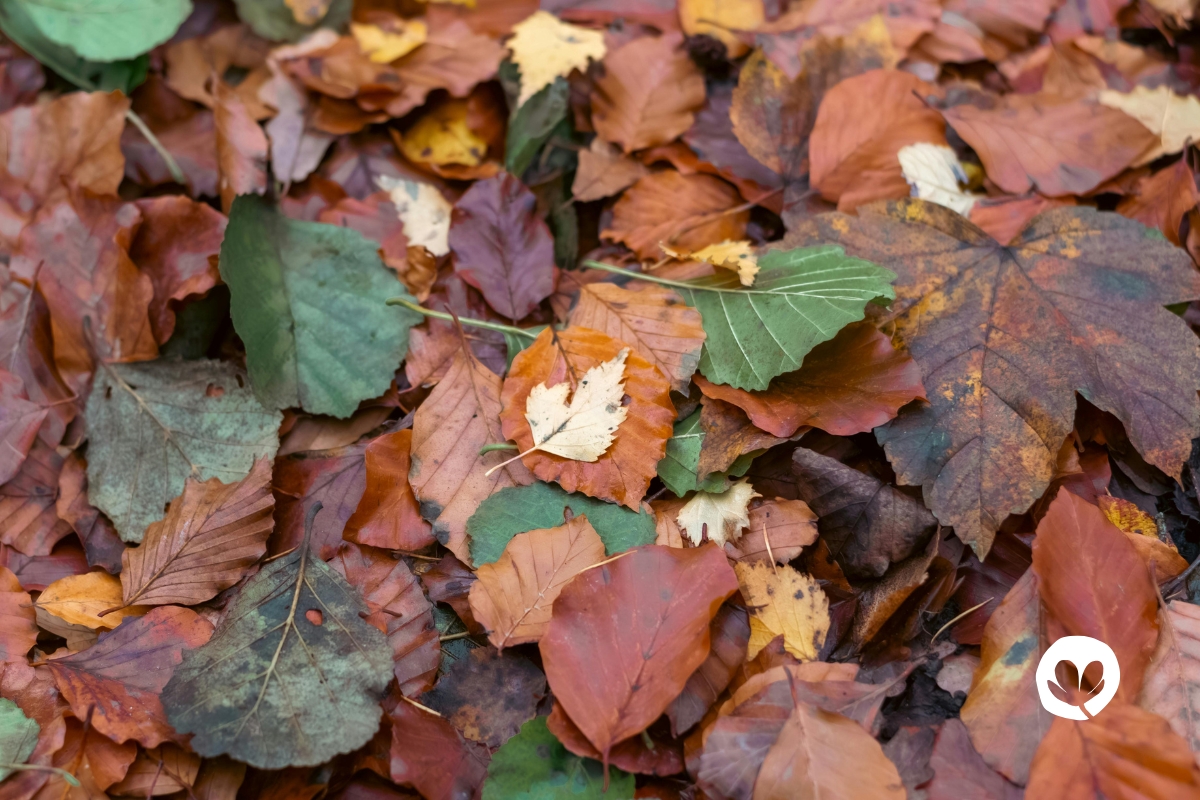
Rather than starting with an explanation, start by comparing. Stand somewhere with several trees in view. Are they all changing at the same time?
Try looking for:
a completely green leaf
a leaf with two colours
a yellow leaf
an orange or red leaf
a brown leaf beginning to break down
You could arrange fallen leaves from greenest to brownest and make a simple picture of autumn moving through the trees.
What is happening?
Leaves look green because they contain chlorophyll. Chlorophyll helps plants capture light energy for photosynthesis. As autumn progresses, chlorophyll begins to break down and the tree stops replacing it at the same rate. As the green disappears, yellow and orange pigments called carotenoids become easier to see.
Those colours were already present in the leaf.
Red and purple colours are slightly different. They come from pigments called anthocyanins, which some plants produce in autumn. Weather also influences how intense autumn colour becomes.
What to say to a younger child:
“The green is disappearing, so some of the other colours in the leaf are easier to see.”
Then ask another question. Why do you think this tree is changing before the one next to it? You do not need to know the answer. “I don’t know. Shall we find out?” is a perfectly good nature-learning response.
2. Helicopter seeds: why do they spin?
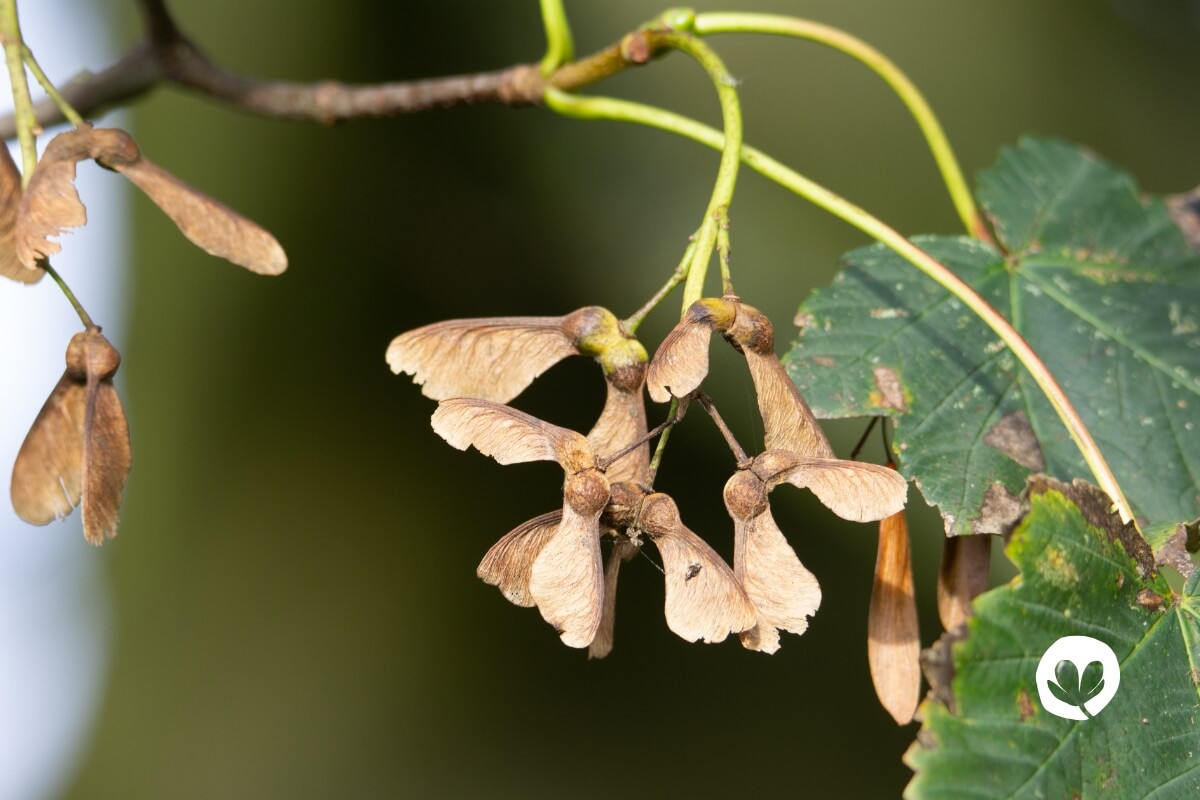
Sycamore helicopters are one of autumn’s easiest pieces of outdoor science. Their proper botanical name is samaras. In the UK, sycamore, field maple, Norway maple and ash all produce winged seeds that people often call helicopters. Sycamore seeds usually turn brown and fall during autumn. Collect several fallen sycamore helicopters and start with a prediction.
Which one will stay in the air longest?
Drop them from the same height.
Watch closely.
Does one spin faster?
Does one drift sideways?
Does a bigger seed behave differently from a smaller one?
What happens if you drop one from higher up?
If you find a naturally damaged seed, compare it with one that still has both wings intact.
What is happening?
The wing makes the seed rotate as it falls. That spinning motion slows its descent, giving the wind more time to move the seed away from the parent tree. Moving away matters because a young seedling growing directly beneath a mature tree would have to compete for space, light, water and nutrients.
What to say to a younger child:
“The wing helps the seed spin slowly down, so the wind has longer to carry it somewhere new.”
You could also collect several kinds of fallen seeds and let your child sort them using their own rules.
Big and small.
Smooth and rough.
Things that roll and things that spin.
Light and heavy.
Then ask why they chose those groups. That simple act of sorting and explaining is classification, one of the ways scientists begin making sense of what they observe.
3. Conkers or chestnuts: what have you actually found?
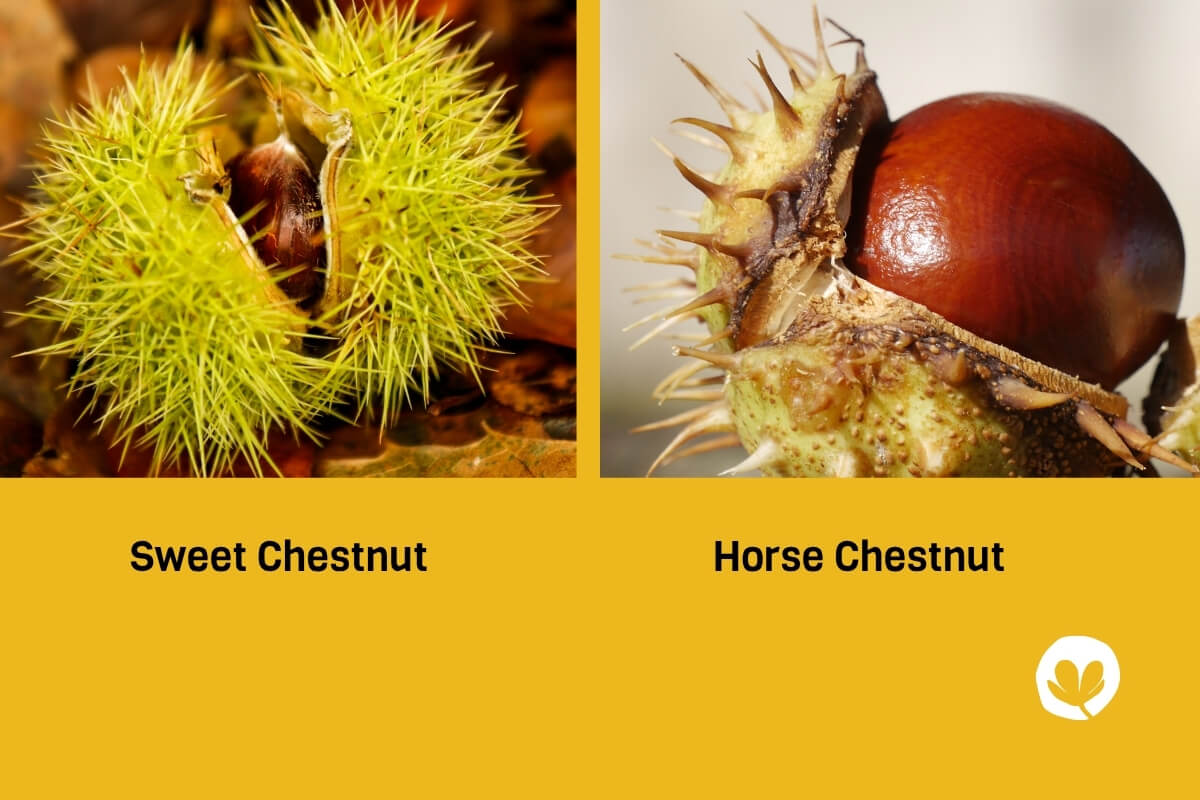
Finding a shiny new conker is one of those very British signs that autumn has properly arrived. Conkers are the seeds of horse chestnut trees and usually fall during September and October. But this is also a good opportunity to learn the difference between horse chestnut and sweet chestnut. Look at the leaves first. Horse chestnut leaves are large and hand-shaped, usually with five to seven leaflets spreading from one point. Sweet chestnut leaves are long and narrow with toothed edges. Now look at the cases. A horse chestnut conker usually sits inside a green case covered in shorter, thicker spikes. Sweet chestnut cases are covered in many much finer, sharper spines and usually contain more than one nut.
What to say to a younger child:
“Conkers and sweet chestnuts look a little alike, but they come from different trees. The leaves and cases give us clues.”
Conkers should not be eaten. They contain substances that are poisonous to people and pets. With younger children, I would treat unknown nuts, berries and seeds as things to investigate rather than taste. There is plenty to explore without eating anything.
Compare a new shiny conker with an older dull one. Look at an open case and a closed one. Count how many conkers are underneath one tree. Look back up. Can your child match what is on the ground with the tree above?
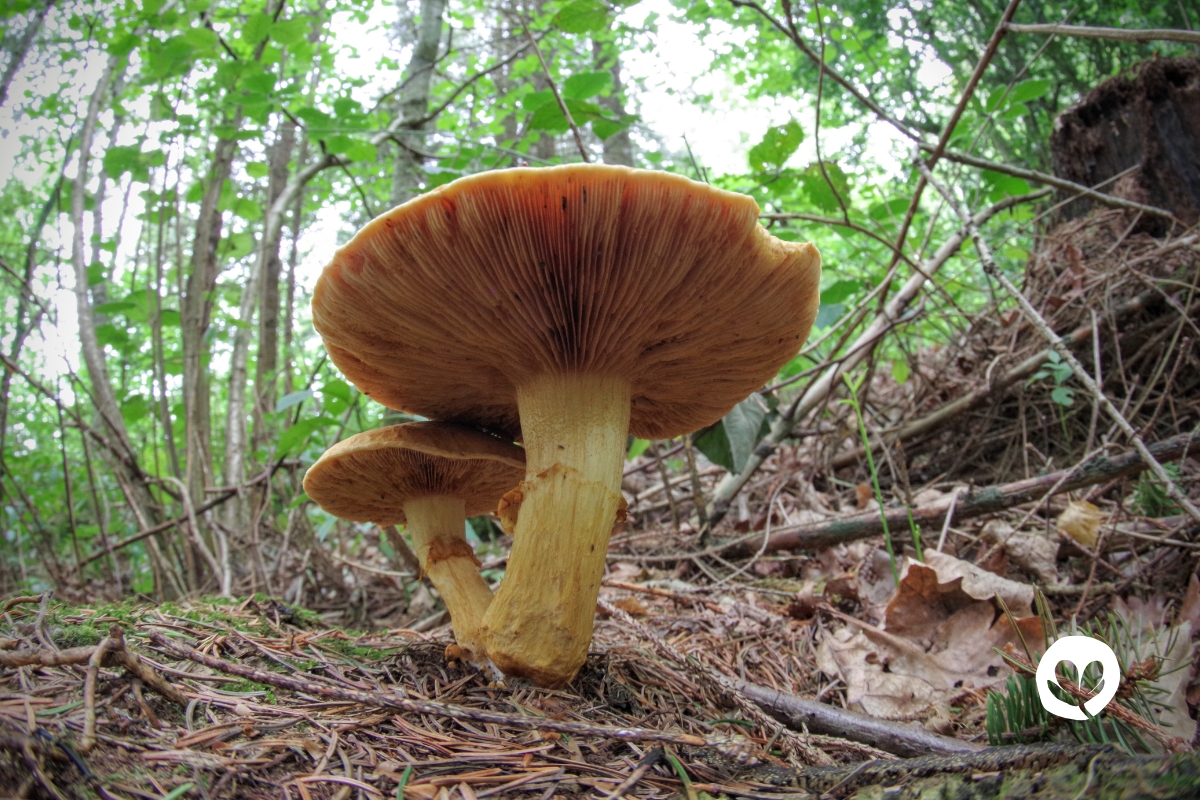
4. Fungi: the part you see is only part of the story
Fungi are one of the reasons an October walk might look completely different after a spell of damp weather. You might see tiny mushrooms among leaf litter, large caps in grass, clusters growing from dead wood or strange shapes emerging from old tree stumps. You do not need to identify any of them to make the discovery worthwhile.
Try looking for:
round, flat or wavy caps
different colours
something growing alone
a cluster
something growing from dead wood
something so tiny you nearly walked past it
With children, I keep unidentified fungi as a looking, photographing and drawing activity rather than something to pick or taste.
What is happening?
The mushroom or toadstool we see is usually the fruiting body of the fungus. Much of the fungus remains hidden in soil, wood or whatever it is growing through as tiny threads called hyphae. Together, these threads form a network called a mycelium. That means the mushroom is only the visible part of a much larger living system. Many fungi also have an important job in woodland ecosystems. They help break down dead organic material, returning nutrients to the ecosystem.
What to say to a younger child:
“The mushroom is the bit we can see. Much more of the fungus is usually hidden underneath or inside what it is growing on.”
Then compare two fungi.
Which is bigger?
Which has a brighter colour?
Are they growing on the same material?
Is one alone and the other in a group?
Children do not need a species name to begin thinking scientifically. “What is different about these two?” is already a good science question.
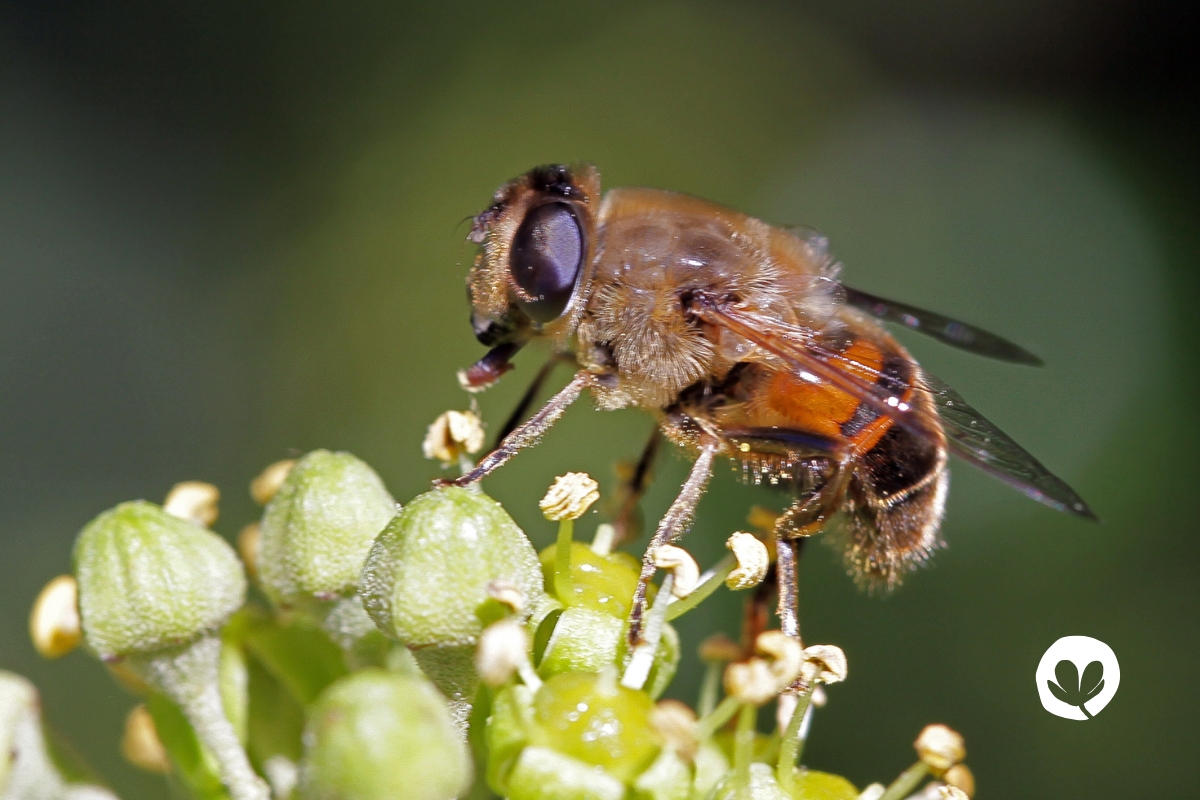
5. Flowering ivy: who is still looking for nectar?
Ivy is easy to walk past because it is there throughout the year. October is a good time to stop. Ivy flowers from September to November. Its small greenish-yellow flowers provide nectar and pollen at a time when relatively few other plants are flowering. Bees, hoverflies, butterflies and wasps are among the insects that visit it. On a mild day, find a flowering patch and watch from a comfortable distance for a minute.
How many visitors arrive?
Are they all the same?
Which stays longest?
Do some insects move quickly from flower to flower?
What to say to a younger child:
“Lots of summer flowers have finished, but ivy still has food for insects.”
This is also a lovely plant to revisit. Later, the flowers give way to dark berries which provide food for birds during winter. Woodland Trust notes that ivy fruits generally ripen from November into January. One ordinary patch of ivy therefore gives you a simple way to watch the season move from autumn towards winter.
6. Hedgerow fruits: why make berries so bright?
October hedgerows bring another burst of colour. Depending on where you live, you might find rosehips, hawthorn berries, rowan berries, sloes and other fruits. Do not make tasting wild berries part of the activity. Instead, investigate them with your eyes.
Which are red?
Which are dark blue or almost black?
Are they growing individually or in clusters?
Which look soft?
Which look shiny?
Which plants seem to have the most fruit left?
Are birds visiting them?
Many fleshy fruits use colour to attract animals. When birds and other animals feed on fruit, they also help plants move their seeds away from the parent plant.
What to say to a younger child:
“The plant’s bright fruit attracts animals. The animal gets food and the plant gets help moving its seeds.”
This also links beautifully with the next thing to notice.
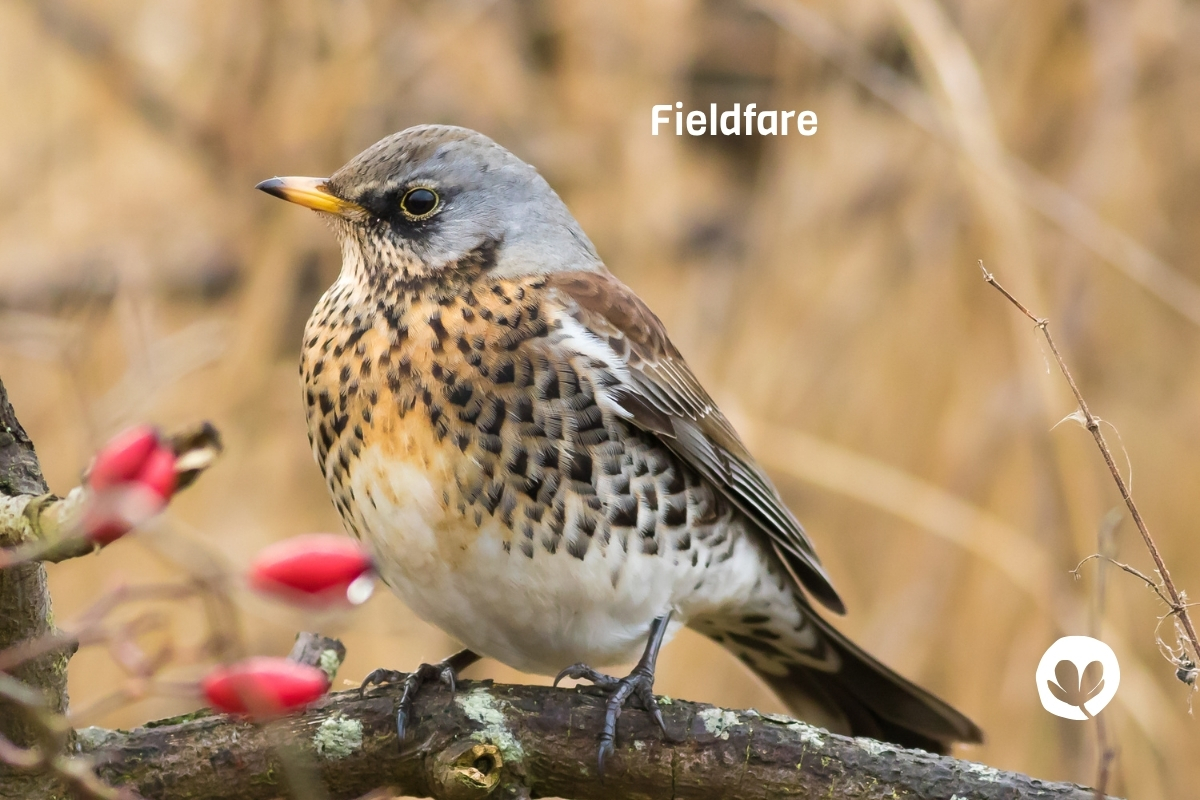
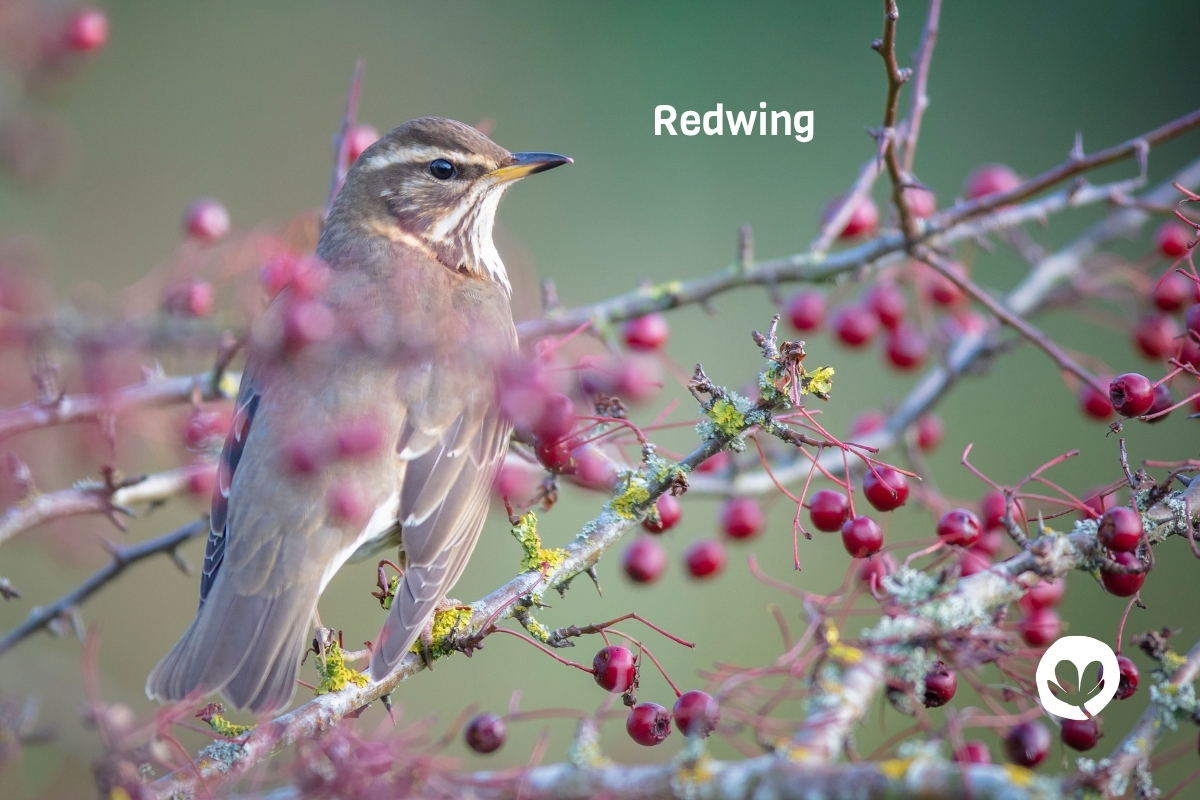
7. Autumn arrivals: listen for Redwings and Fieldfares
Some birds are leaving the UK in autumn. Others are arriving. Redwings and Fieldfares are thrushes that travel here from colder parts of Europe to spend the winter feeding on berries and fallen fruit. A Redwing is smaller than a Fieldfare. Look for a pale stripe above its eye and rusty-red colouring beneath the wings. A Fieldfare is much larger, with a grey head. Redwings migrate at night and their high, thin “tseep” call is sometimes heard overhead from October onwards across the UK.
Try a one-minute listening challenge.
How many different bird sounds do you hear?
Which sound is closest?
Which is furthest away?
Can you work out the direction?
Does the same call repeat?
What to say to a younger child:
“Some birds leave Britain for winter and other birds arrive here because winter is milder than where they came from.”
That gives a child a much bigger idea to think about. The wildlife around us changes with the seasons even when the place itself looks familiar.
Stop walking and investigate one small patch.
You do not need seven different finds to have a successful nature walk. Choose an area about the size of a picnic blanket.
A patch of woodland floor.
The ground under one tree.
A corner of the garden.
A grassy verge somewhere safe.
Then stop walking.
What is inside your patch? A seed? Moss? A tiny fungus? A feather? A hole? Dead leaves? Something beginning to decay? Something nobody recognises?
A hula hoop or loop of string gives younger children a clear boundary if they enjoy having one. Children often notice far more when adults stop moving them towards the next thing.
Come back later
One of the simplest ways to explore autumn is to visit the same place more than once. Choose one tree, path, garden corner or patch of woodland. Take a photograph from somewhere you will recognise. Come back a week or two later and photograph it again from roughly the same place. Compare the pictures.
Are there fewer leaves on the tree?
Have the colours changed?
Are more seeds on the ground?
Have fungi appeared?
Have others disappeared?
Does the ground look wetter?
Does it sound different?
Does the light feel different?
Seasonal change is much easier to understand when children watch it happening for themselves. If your child becomes particularly interested in recording seasonal change, families are also able to submit observations to the Woodland Trust’s Nature’s Calendar citizen-science project.
One of the easiest ways to accidentally make a nature walk hard work is to feel that the adult needs to know everything. You don’t.
Useful questions include:
Why did this leaf change colour before that one?
Why is this fungus growing on a log?
Why did this seed land here?
Where is that bird going?
Who has been eating these berries?
What made this tiny hole?
Why are there lots of these here and none over there?
“I don’t know” is not the end of the activity. It is often the beginning. You might look it up together later. Your child might make a guess. You might photograph it and completely forget about it. All of those outcomes are fine.
If your child becomes fascinated by one conker, stay with the conker. If they want to drop sycamore seeds for half an hour, keep dropping them. If the fungi suddenly become the only thing worth talking about, follow the fungi. And if everyone has had enough after ten minutes, go home. Nature learning does not have to produce a finished worksheet, craft or collection to count.
If you home educate and want a record of what happened, a photograph, quick drawing or one sentence about what your child noticed is plenty. Sometimes noticing one thing you didn’t notice yesterday is enough.
Nature Curious is built around this same approach.
The activities give you somewhere to start. They are not a programme you have to finish.

If leaves become interesting, there are activities around autumn colour and leaf art. If fungi take over for a week, there is an autumn fungi hunt. If everyone needs to move, there is a sensory autumn walk. There are also activities around birds, sound, seeds, seasonal science and creative play. The Nature Curious Autumn Digital Pack is ready to download and use at home.
The physical Nature Curious Autumn Box brings the seasonal activities together in a ready-to-use format for UK families.


