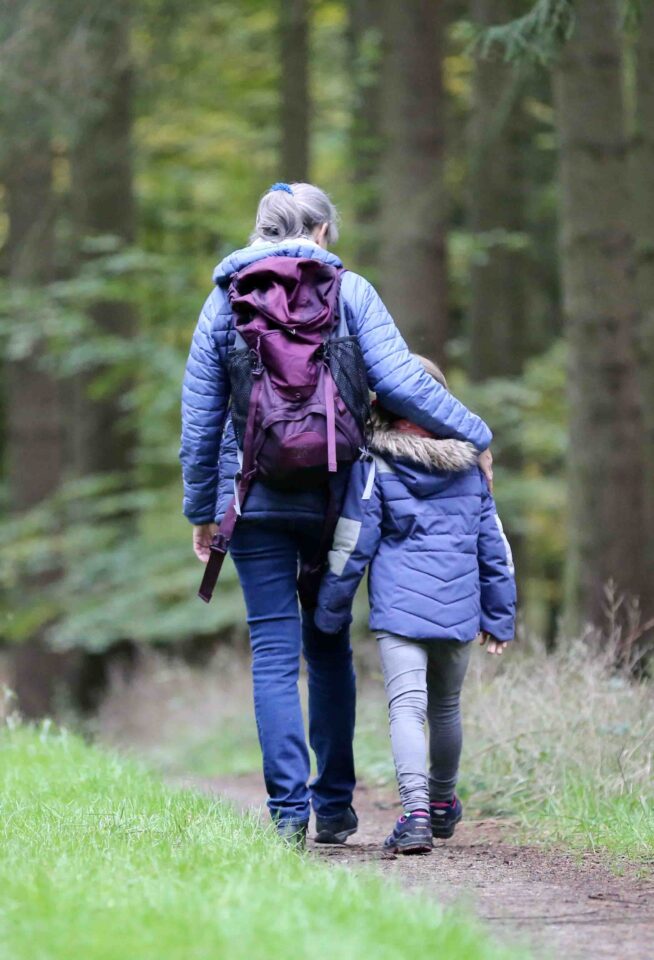
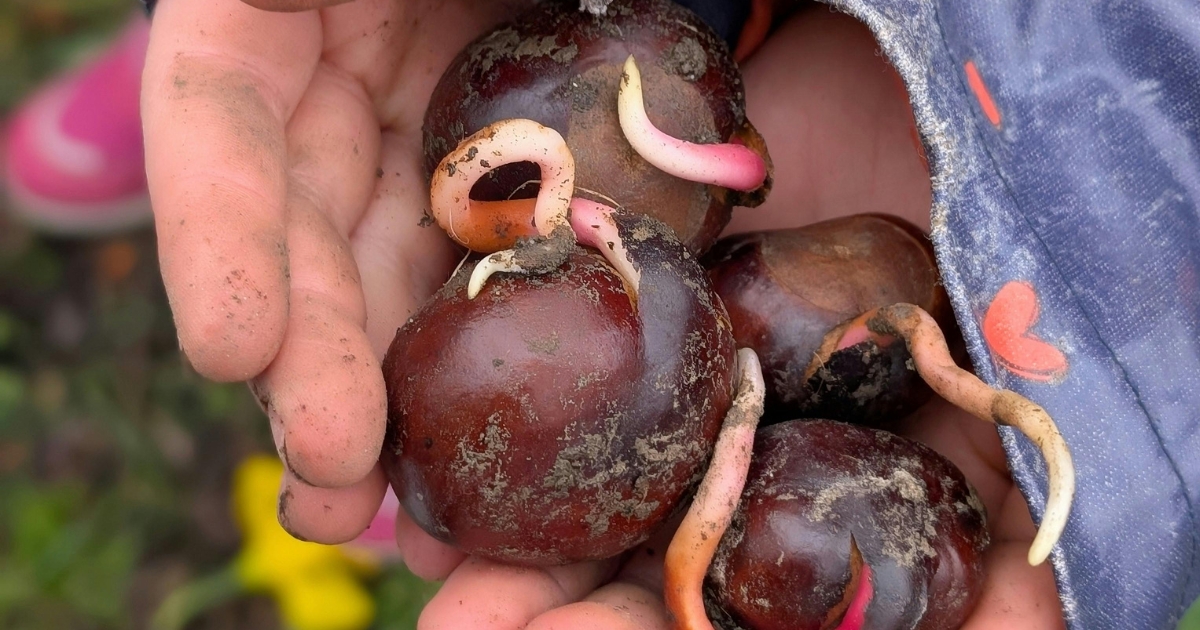
September brings a particular kind of activity to British parks, hedgerows and woodlands. Seeds are on the move: dropping, spinning, hooking onto socks, splitting open underfoot. It’s one of my favourite things to notice with my own daughter, because it needs nothing more than a walk and a bit of curiosity.
This year, the Tree Council’s Seed Gathering Season runs from 23rd September to 23rd October across the UK, timed to start on the autumn equinox. It’s the perfect excuse to slow down on your usual walk and actually look at what’s falling around you.
Seven ways to make the most of it
Go on a seed safari
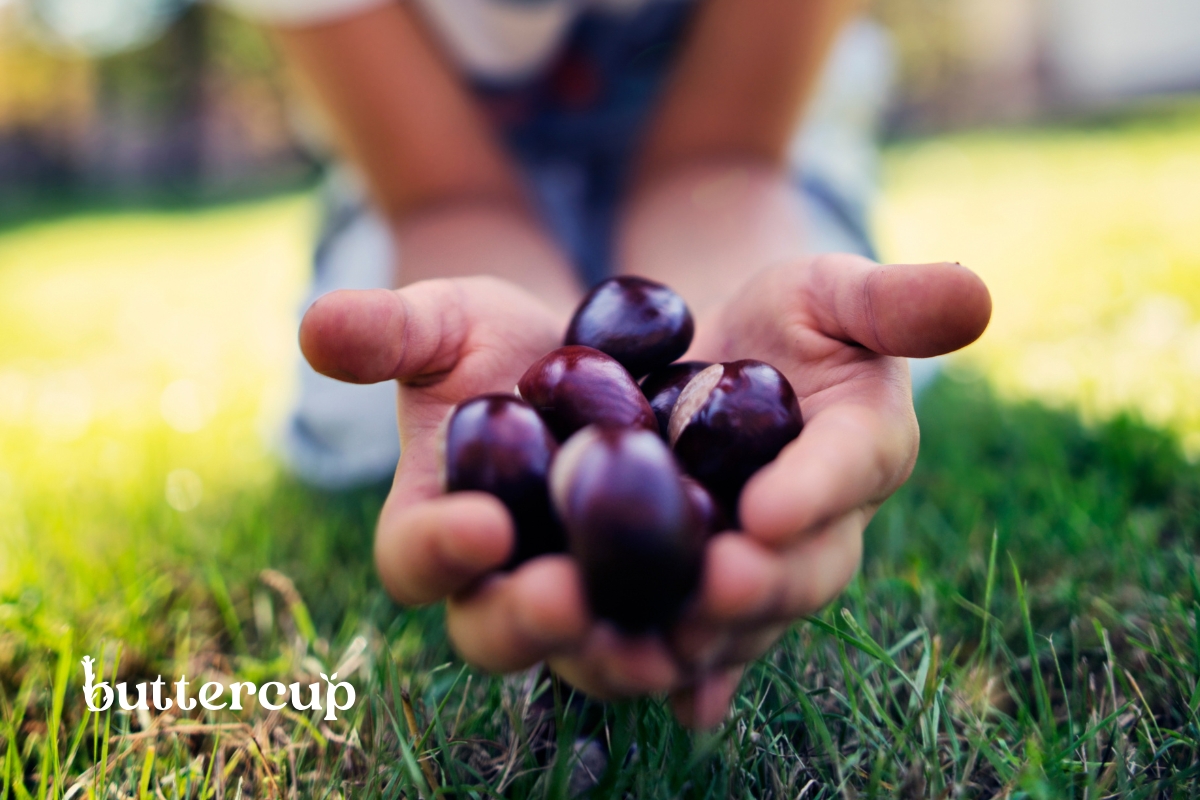
Local parks, hedgerows and your own garden are full of finds if you know where to look: conkers, acorns, sycamore helicopters and poppy heads. Take a couple of paper bags and a notebook, and ask your child how they think each seed travels. Is it heavy or light, rough or smooth? You don’t need the right answer, just a guess worth testing.
Set up a nature table or seed museum
A windowsill or shelf works fine. Sort what you’ve found on the ground by shape or colour, label the ones you know, and leave the rest as a mystery to solve later. A seed journal is a nice extension if your child likes to sketch or track what turns up through the season.
Try a seed dispersal experiment
Blow dandelion seeds or ash keys and watch how far they travel. Drop conkers and see how they roll. Float sycamore seeds in a bowl of water and watch them spin. If your child wants to build their own launcher out of a spoon or a paper funnel, let them.
Collect and plant a tree seed
Oak, hazel, birch and rowan are all good British natives to start with. Choose one seed, plant it in a pot, and keep a simple growth diary. It’s slow. That’s rather the point.
Make something with what you’ve found
Seed pods, acorn caps and dried seed heads all lend themselves to a bit of craft: mandalas on a paper plate, an acorn cap necklace, a leaf and seed collage on old card. If sensory textures are tricky for your child, a tray to contain things and the option to opt in or out helps a lot.

Cook with seasonal seeds
Roast pumpkin or squash seeds, bake a seeded flatbread, or just talk about the seeds already in your kitchen, in the bread, the crackers, the fruit. It’s an easy way into a conversation about where food actually comes from.
Mark the equinox
The 23rd of September is Mabon, a modern seasonal marker of balance as the year tips into darker days. You don’t need anything elaborate. Sit outside as the sun sets, tell a story about growth or change, and let your child choose one seed to keep safe over winter.
A few other UK dates worth knowing this September
Zero Waste Week, a UK-founded campaign, runs 7th to 11th September this year, a good nudge to think about what leaves your bin and where it actually ends up. The International Day of Clean Air for Blue Skies falls on 7th September too. And the autumn equinox itself, on 23rd September, marks the start of the UK’s Seed Gathering Season and the proper beginning of autumn here.
Want to keep exploring?
The Nature Curious Autumn Box has plenty more seasonal activities like these, ready to pull out whenever curiosity strikes. Prefer to print at home? The Digital Pack has the same activities in a different format.
Seed season doesn’t ask for much. A walk, a pocket, a bit of patience while something grows slowly enough that you’ll have forgotten to check on it by the time it does.
References
‘Seed Gathering Season: Gather a seed, grow a tree’ The Tree Council
https://treecouncil.org.uk/seed-gathering-season-gather-a-seed-grow-a-tree/
‘What and when is the autumnal equinox?’ Royal Museums Greenwich
https://www.rmg.co.uk/stories/time/what-when-autumnal-equinox
‘About’ Zero Waste Week, Rachelle Strauss
https://www.zerowasteweek.co.uk/about/
‘Mabon and the Autumn Equinox: a celebration of balance, abundance, and nature’s transition’ British Pilgrimage Trust
https://www.britishpilgrimage.org/stories/mabon-and-the-autumn-equinox-a-celebration-of-balance-abundance-and-natures-transition