November can feel like the month when autumn starts disappearing.
The brightest leaves are coming down. Trees that looked completely different a few weeks ago are suddenly bare. The mornings are darker, the ground is wetter and some of the wildlife that was easy to spot in September seems to have vanished.
It is easy to look out of the window on a grey November morning and think the outdoor world has gone completely quiet. But November is not an empty month. It is a month of change.
Some wildlife is arriving in the UK. Others are tucking themselves away into sheltered winter spaces. Fallen leaves are beginning another stage of their life, starlings are gathering in huge twilight flocks and trees are quietly preparing for the colder months.
For children, this transition makes November a lovely, unhurried month for asking a single question:
What is different now?
We’ve found trying to find everything on a nature checklist is a quick route to cold, grumpy children and stressed parents. Instead, pick one thing your child notices and follow it.
Exactly what you see will depend on where you live in the UK and what the weather has been doing. Here are seven gentle signs to look for together this month.
The trees are entering abscission
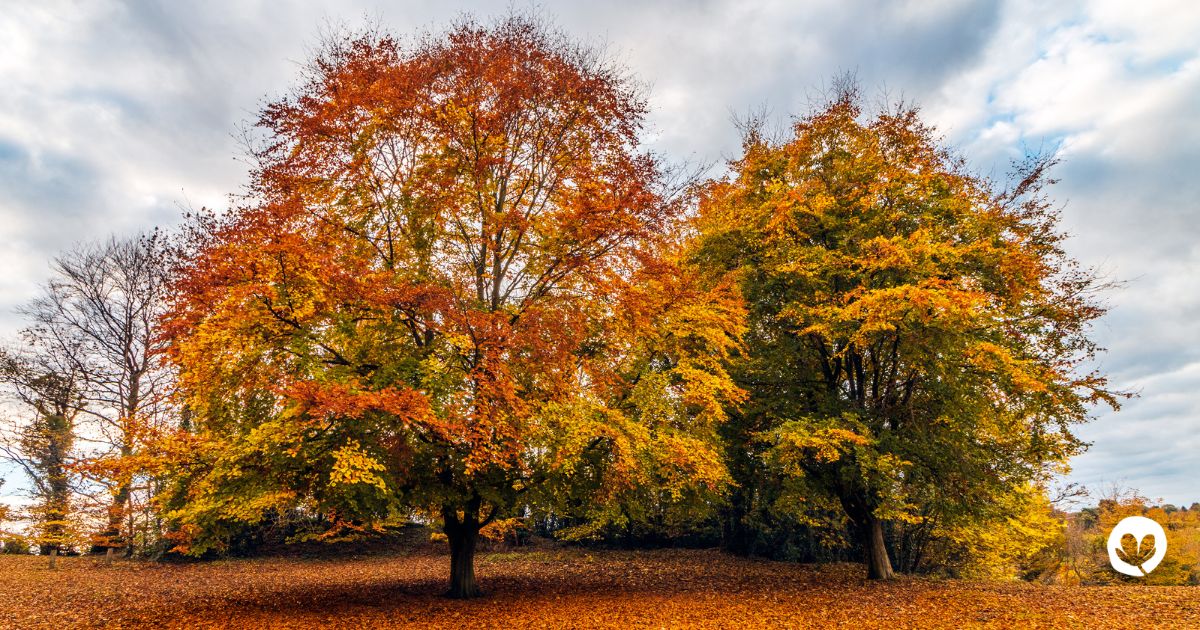
By November, many deciduous trees have lost almost all of their leaves.
Shorter autumn days and cooler temperatures trigger changes inside the leaf. Chlorophyll, the green pigment used in photosynthesis, begins to break down and is no longer replaced as quickly. As the green fades, yellow and orange pigments called carotenoids become easier to see.
Before the leaf falls, the tree recovers useful nutrients such as nitrogen and phosphorus. These resources are stored for later use in parts of the tree including its branches, trunk and roots.
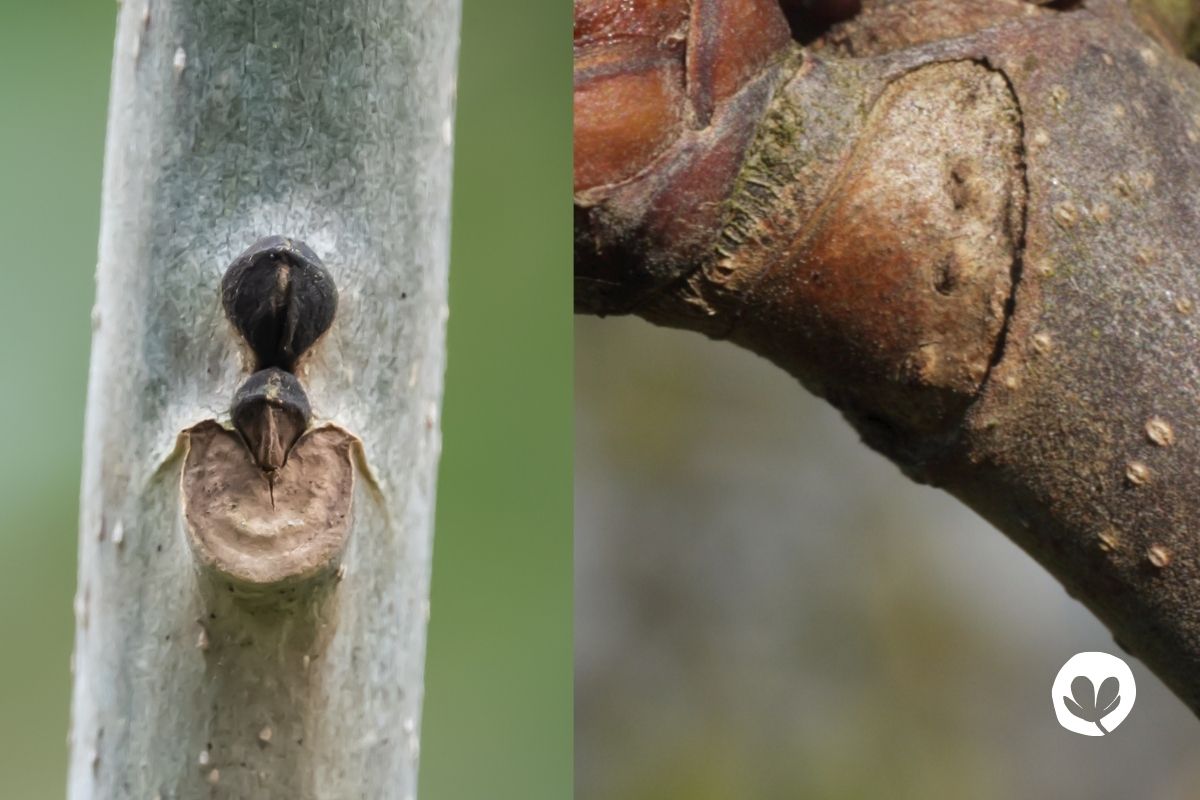
Changes also take place in a special layer of cells where the leaf stalk joins the twig. This is called the abscission layer. Eventually the connection weakens and the leaf falls, leaving a sealed leaf scar behind.
Try this next time you’re outside:
Look at a bare branch up close. See if you spot the tiny scar where the leaf stalk used to be attached.
Look along your street or across a park. Find one deciduous tree with almost no leaves and another still stubbornly holding onto its gold.
A simple way to explain this:
The tree is recycling some of the goodness inside its leaves and storing it for later. Then the leaf connection weakens so the old leaf falls away.
How evergreens cope with winter
While deciduous trees lose their leaves, children often notice holly, pine, yew and ivy staying green.
Evergreen plants keep functioning leaves throughout the year. They still shed old leaves, but usually lose them gradually rather than dropping their whole canopy at once.
One challenge for plants during winter is holding onto water, especially during very cold weather when water in the soil becomes harder for roots to access.
Many evergreen leaves have thick, waxy surfaces that help reduce water loss.
Conifers such as pines also have narrow, needle-shaped leaves. Their small surface area helps limit water loss, and many conifers have stomata, the tiny pores involved in gas exchange, adapted in ways that further reduce moisture loss.
Try this next time you’re outside:
Compare an evergreen leaf, such as ivy or holly, with a deciduous leaf, such as maple or birch.
Which leaf feels thicker?
Which feels waxier?
Which bends more easily?
If you find a pine or another conifer, compare its needles with the broad leaves too.
You’ve introduced your child to plant adaptation through a simple touch test.
A simple way to explain this:
Evergreens have leaves that help them hold onto water. Many have tough, waxy leaves, while conifers such as pines have narrow needles.
The secret work of fallen leaves
By November, woodland paths and gardens are covered in a thick, damp carpet of leaves.
Where do they all eventually go?
They don’t disappear.
Fallen leaves are gradually broken down by a whole community of organisms.
Detritivores such as woodlice, earthworms and millipedes eat and break up dead plant material. Fungi and bacteria continue the decomposition process, recycling nutrients and organic matter through the soil ecosystem.
This means materials from last year’s growth become part of the natural cycle supporting future plant growth.
Leaf piles also provide insulated winter shelters for creatures including beetles, spiders and hedgehogs.
Try this next time you’re outside:
Go on a hunt for leaves at different stages of their winter journey.
A freshly fallen, crisp leaf.
A faded, damp leaf.
A skeleton leaf, where much of the softer material has disappeared but the structural veins remain.
A leaf crumbling into dark organic matter.
A simple way to explain this:
Tiny creatures, fungi and bacteria are breaking the old leaf down. Its nutrients become part of the soil ecosystem and get used again.
This also links beautifully to the fungi you might have spotted during autumn.
The mushroom we see above ground is the fruiting body of a fungus. Hidden threads called mycelium spread through soil, leaves or wood.
Some fungi help break down dead material. Others form close relationships with living plants and trees.
There is far more happening beneath a woodland floor than we see from above.
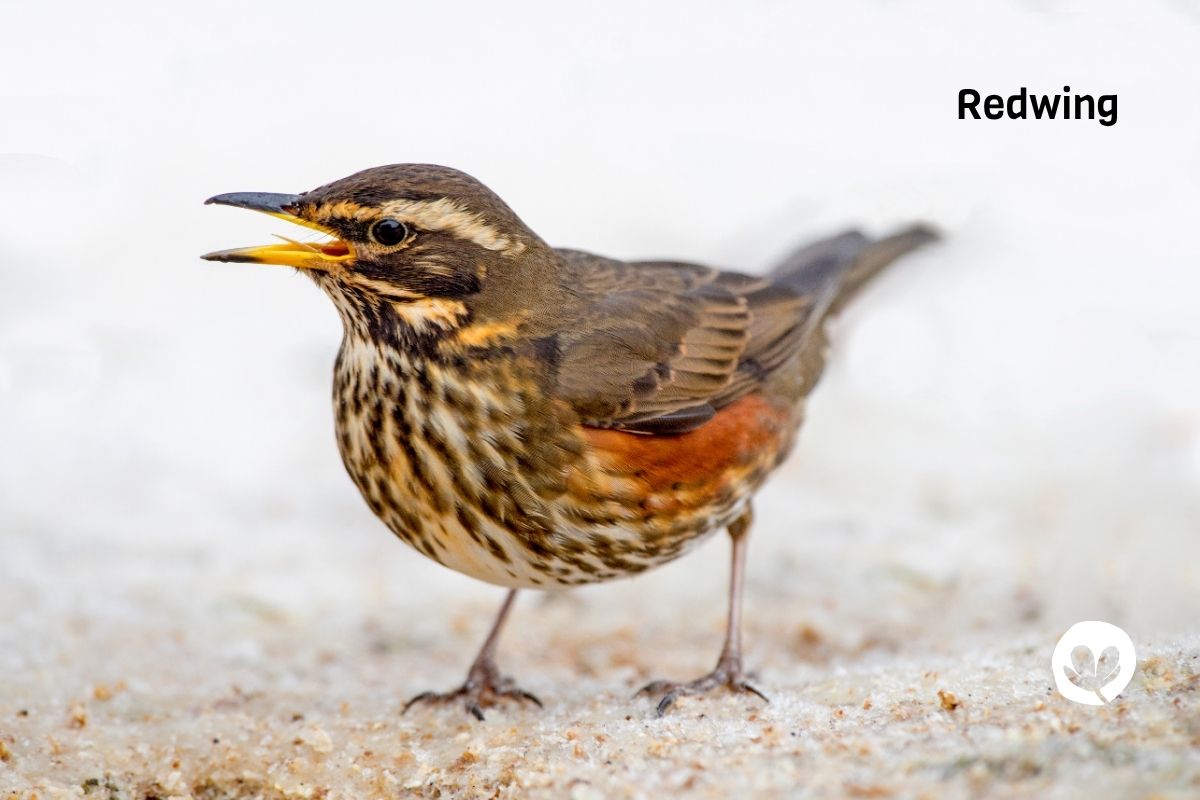
Winter visitors are arriving
We often talk about birds leaving the UK for warmer climates, but for many birds from colder parts of Europe, Britain is a winter destination.
Fieldfares and Redwings arrive from northern and eastern Europe, including Scandinavia and Russia.
Britain’s relatively mild winter and plentiful autumn and winter food provide important feeding opportunities.
Look for these winter visitors feeding on berries such as hawthorn and rowan, or eating fallen fruit in gardens, fields and orchards.
Try this next time you’re outside:
Look closely at berry-rich hedges on your street or in a local park.
Do you spot any birds feeding?
Are they alone or in a group?
You don’t need to identify every species. Watch what they do.
Are they busy, shy or bold?
A simple way to explain this:
Some birds fly to Britain for winter because places farther north get much colder, and there is food for them to find here.
The science of starling murmurations
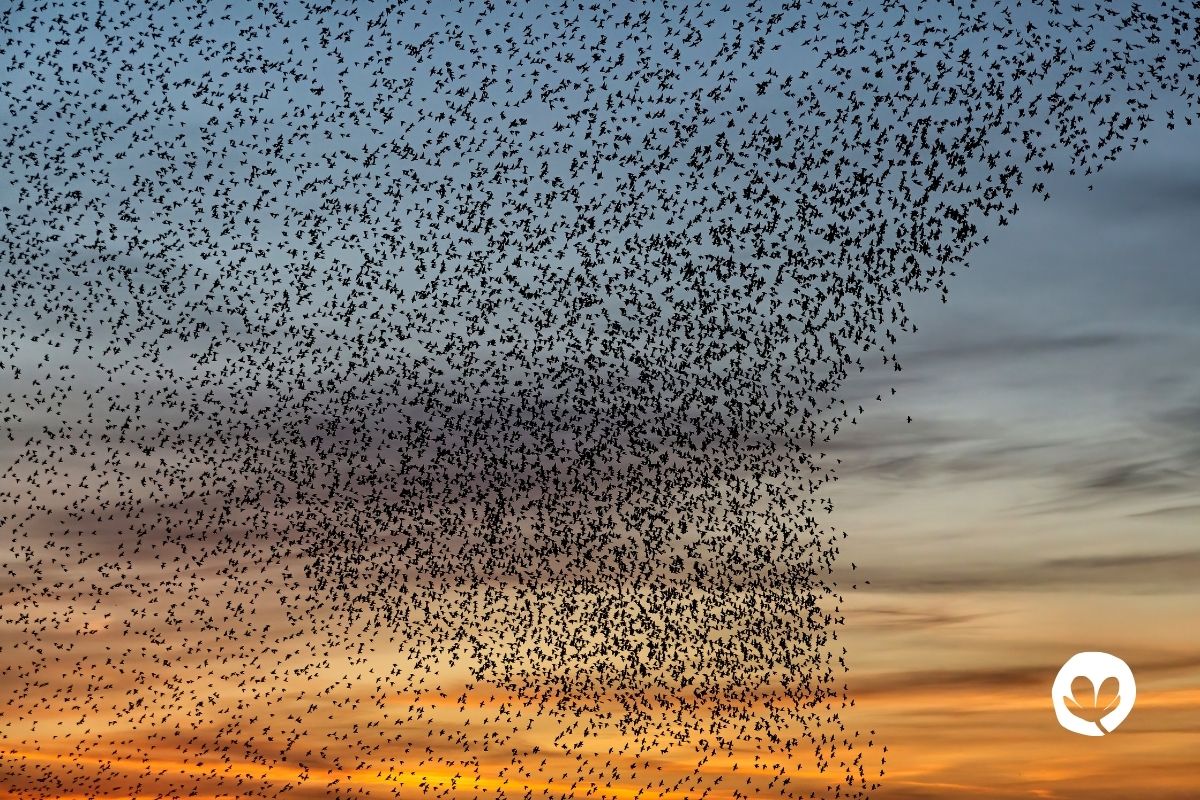
November is when starling murmurations start becoming one of the most spectacular wildlife sights of the colder UK months.
Our resident starlings are joined by large numbers of winter visitors from other parts of Europe.
Around dusk, starlings gather before settling into communal roosts for the night. Large flocks sometimes sweep and turn together through the sky in swirling patterns called murmurations.
One of the fascinating questions scientists have explored is how so many individual birds manage to move together without one bird leading the entire flock.
Studies of large starling flocks suggest each bird responds to a small number of nearby neighbours, often around six or seven.
As birds react to changes in the movements around them, shifts in speed and direction spread rapidly through the flock.
Other research has found strong connections between movements across an entire flock. This helps scientists understand how thousands of birds respond together so quickly.
Try this next time you’re outside:
Watch a flock of starlings.
How many seem to be together?
Watch what happens when the flock turns.
Does the change appear to ripple through the group?
Try following one bird with your eyes for a few seconds.
A simple way to explain this:
There isn’t one boss starling telling everybody where to fly. Each bird watches a small group of birds around it and responds to what they do. Those reactions spread quickly through the flock.
How insects make it through winter
By November, the insect world feels much quieter.
But insects have many different ways of getting through winter.
Some enter diapause, a period when development and activity slow dramatically.
Depending on the species, an insect might overwinter as an egg, larva, pupa or adult.
Many moths and butterflies spend the colder months in one of these earlier life stages.
Peacock and Brimstone butterflies are examples of species that overwinter as adults, although they choose different kinds of sheltered places.
Most new queen bumblebees also spend winter alone in sheltered locations, often underground.
Some insects have another fascinating cold-weather adaptation.
Certain species produce substances in their body fluids that help them tolerate very low temperatures. Some of these substances work a little like biological antifreeze, helping protect the insect from damage during freezing conditions.
Not every insect uses this strategy, and different species have evolved different ways of surviving winter.
Try this next time you’re outside:
Look for possible winter hiding places rather than searching for the insects themselves.
Look at cracks in tree bark, hollow plant stems, log piles, leaf litter and sheltered corners of the garden.
Leave these little habitats undisturbed. The challenge is imagining what might be tucked away inside.
A simple way to explain this:
Insects survive winter in lots of different ways. Some rest in hidden places, some wait as eggs or caterpillars and some even make special substances in their bodies that help them cope with freezing temperatures.
Why November light is different
The days are getting shorter because of the tilt of the Earth as it travels around the Sun.
Earth is tilted on its axis by about 23.5 degrees.
As Earth orbits the Sun, this tilt means the Northern Hemisphere faces the Sun differently at different times of year.
During our winter months, the Northern Hemisphere is tilted away from the Sun.
The Sun stays lower in our sky. Its energy reaches the ground at a shallower angle and is spread over a larger area.
We also experience fewer hours of daylight.
Both changes mean we receive less solar energy during winter than we do during summer.
Try this next time you’re outside:
Look at the shadows on your afternoon walk.
Do they seem longer than they did in summer?
Take a photograph from the same window at around 4pm once a week during November. Watch how the light and darkness change as the month passes.
A simple way to explain this:
Because the Earth is tilted, our part of the world faces the Sun differently in winter. The Sun stays lower in our sky and we have fewer hours of daylight, so we receive less energy from sunlight.
A gentle reminder: Nature learning counts, even when it’s small
November weather is not always inviting.
The ground is wet, the wind feels biting and many children and adults absolutely hate cold fingers and damp clothes.
You do not need to force a long, exhausting woodland walk to make nature learning worthwhile.
Look out of the window at the rain.
Listen to the wind from the doorstep.
Choose one tree on your street to watch from the car.
Investigate a handful of fallen leaves at the kitchen table.
Watch birds visiting a hedge from indoors.
Step outside for five minutes and look at the evening sky.
Nature learning still counts when it is small, cosy and over in five minutes.
The final weeks of Autumn Curious
November is the final month of our Nature Curious Autumn Collection.
Our autumn digital packs are designed to be dipped into whenever they match what your child is noticing outside.
There is no pressure to finish every page before winter begins.
Use what fits your family’s energy level this week and leave the rest for next year.
The digital collection is available to download instantly in our Payhip shop, and our remaining physical autumn boxes are available while stocks last.
Explore the Autumn Nature Curious Digital Pack
Explore the Autumn Nature Curious Physical Box
What is the one thing your child has noticed shifting outside this week?
Drop me an email. I’d love to hear what is catching their attention.