
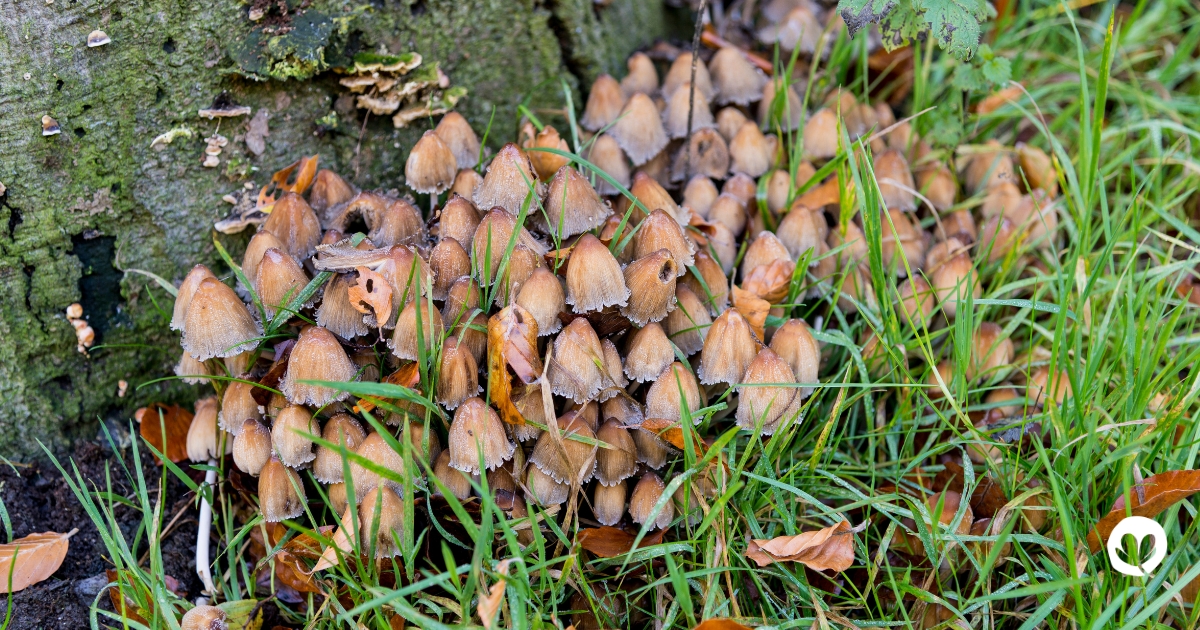
Autumn fungi have a habit of appearing where you were certain there was nothing the week before.
One spell of damp weather and suddenly there are tiny mushrooms in the grass, brackets growing from old wood, bright caps among fallen leaves, and strange shapes pushing through the woodland floor.
For children, fungi offer an extraordinary amount to investigate.
When my daughter was younger, we had days when leaving the house felt like a massive mountain to climb. On those low-energy days, we stopped trying to plan big walks.
Instead, we would step just as far as our garden path or the nearest damp tree stump.
We found that fungi were the perfect companions for those unhurried days. They do not move, they do not rush, and they reward slow, sensory-aware looking.
You do not need to know all their names to enjoy them.
In fact, identification does not need to be the starting point at all. Shape, colour, habitat, size, pattern and change give children plenty to explore before anybody reaches for a field guide.
October is particularly brilliant for fungi spotting in the UK. While fungi live around us throughout the year, the cooler, wetter conditions of autumn help many species produce the fruiting bodies that we recognise as mushrooms, brackets, puffballs and other visible forms.
When we are out exploring, we always start with one simple question:
“What do you notice?”
Our Simple Rule for Fungi Walks
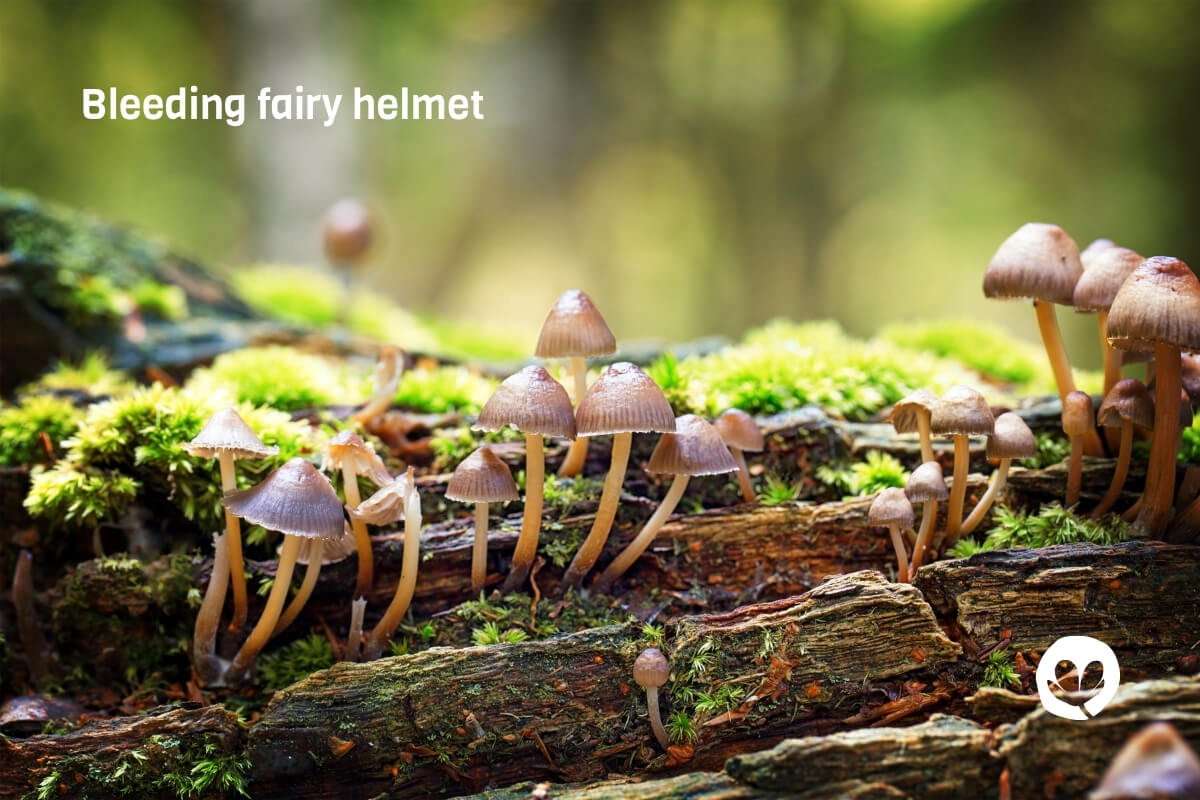
Some UK fungi are poisonous, and many species are difficult to identify accurately.
For our family walks, we keep things simple by focusing on three steps:
• Look
• Photograph
• Draw
We leave unidentified fungi exactly where they are.
We have found there is no need to collect or taste anything to have a rich experience. This approach also helps children see the fungus as an active part of its home.
The rotting log, tree roots, moss, grass or leaf litter around it are all part of the story.
What Actually Is a Fungus?
One of the first questions children often ask is whether a mushroom is a plant.
It belongs to its own biological kingdom.
The mushroom we see above ground is usually only a small part of the whole organism.
Much of a fungus consists of extremely fine, thread-like structures called hyphae. Together, they form a network called mycelium, which often remains hidden in soil, wood, leaf litter or other material.
The mushroom is a fruiting body. Its main job is to produce and release spores, which help fungi reproduce.
So, when your child finds a single mushroom on the woodland floor, there is often a much larger hidden fungal network growing beneath or around it.
What we say to a younger child
“The mushroom is the tiny part we can see. Most of the fungus lives as a hidden, thread-like web underground, or inside the wood it is growing on.”
This simple shift in perspective changes how children view a walk.
Instead of only asking, “What mushroom is this?” they start wondering:
• Where is the rest of it hiding?
• What is it growing through?
• Why did it appear right here?
• What will happen when this mushroom disappears?
1. Go on a Fungi Shape Hunt
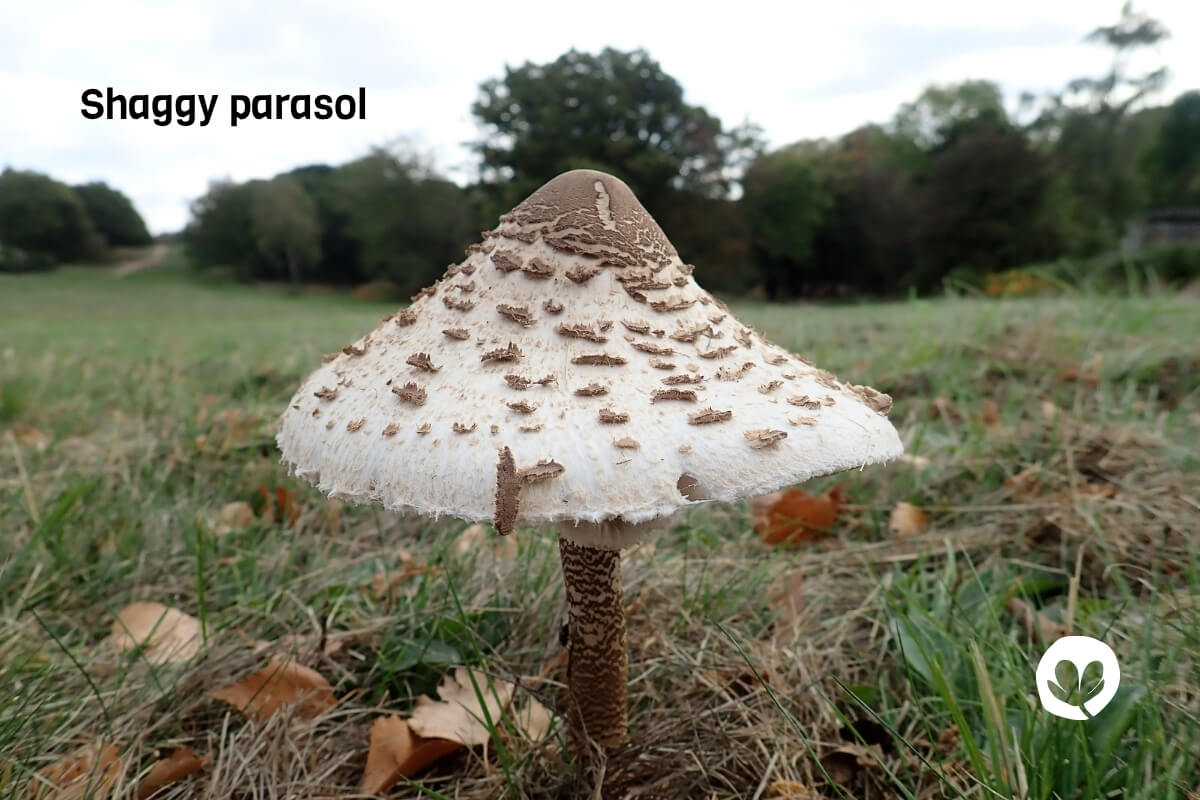
We love to forget about names for a while and focus entirely on shapes.
Fungi fruiting bodies come in far more forms than the classic storybook mushroom with a cap and stalk.
On your next walk, you might look for something:
• Round and smooth
• Flat and shelf-like
• Wavy or ruffled
• Cup-shaped
• Bracket-shaped, growing like shelves on trees
• Jelly-like and squishy
• Club-shaped
• Growing in a tight cluster
• Growing in a fairy ring
• Tiny enough to walk straight past
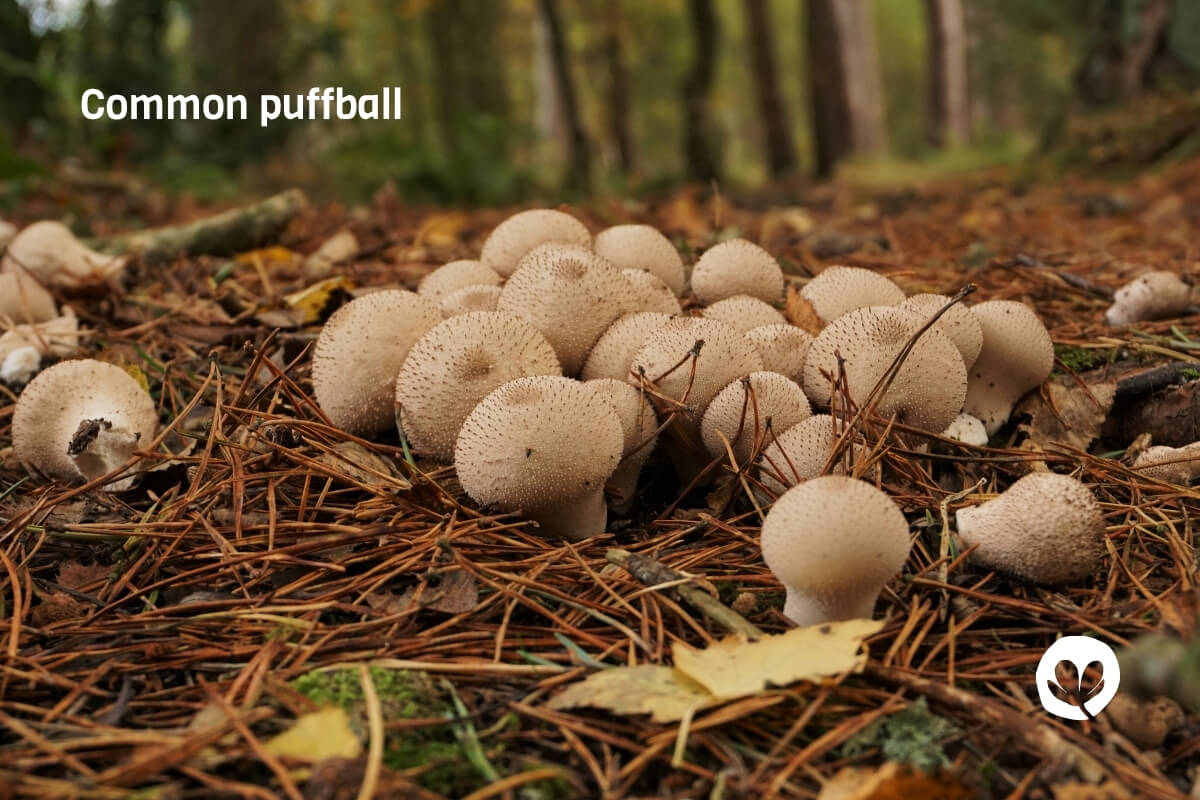
For a low-energy day, the challenge can simply be seeing how many different shapes you can find in a tiny area.
We prefer to take photographs rather than collecting them.
Later, you can print the pictures or look at them on a screen side-by-side.
You might ask:
Which two look most alike?
Which one has the strangest shape?
Which would be the most fun to sketch?
This is a gentle, sensory way to practise classification, helping children notice patterns and group things using their own observations.
2. Notice Where Fungi Grow
One of the most useful questions to ask is also one of the simplest:
“What is it growing on?”
We always try to look around the fungus before looking closely at the mushroom itself.
You might notice them growing:
• In damp soil
• Among fallen leaves
• Directly from a dead branch
• On a rotting log
• From a tree stump
• On the bark or trunk of a living tree
• Through short grass
Different fungi live in different ways.
Many feed on dead organic material. These decomposer fungi help break down dead leaves, wood and other plant material, helping nutrients cycle back through the ecosystem.
Without fungi, bacteria and other decomposers, dead leaves and fallen wood would build up and nutrients would be recycled much more slowly.
What we say to a younger child
“Fungi are part of nature’s recycling team. They help break down dead leaves and wood so nutrients can return to the soil and be used again.”
This helps children view the “untidy” parts of a wood or garden with new appreciation.
A fallen log is not rubbish, dead leaves are not doing nothing, and decay is a necessary part of the woodland cycle.
3. Look for Underground Tree Partners
Not every fungus lives by breaking down dead material.
Many form cooperative relationships with living trees and plants, known as mycorrhizal relationships.
Fine fungal threads grow in close association with plant roots.
This partnership can help a tree take up water and mineral nutrients from the soil. In return, the fungus receives carbon-rich compounds produced by the plant through photosynthesis.
Most of this partnership happens entirely out of sight, but your child can sometimes spot clues above ground.
Mushrooms appearing around the base of a tree may be the fruiting bodies of fungi living in partnership with its roots.
What we say to a younger child
“Some fungi and trees help each other underground. The fungus helps the tree take up water and nutrients from the soil, and the tree shares some of the sugars it makes with the fungus.”
Children who enjoy unusual scientific words often love learning the word mycorrhiza.
It turns a regular walk into an exploration of a hidden cooperative world beneath our boots.
4. Fairy Rings: Folklore and Mycelium
Sometimes mushrooms appear in a nearly perfect circle.
These are known as fairy rings. For centuries, people noticed these circles on lawns and forest floors without understanding how they grew.
In British folklore, stories developed about fairies and other supernatural beings dancing in circles overnight and leaving rings of mushrooms behind.
The scientific explanation is fascinating too.A fungal colony grows through the soil, and its mycelium can gradually spread outwards in all directions.
As it expands, this can create an increasingly large circle. When conditions are right for fruiting, mushrooms may appear around the outer edge of this hidden fungal network.
What we say to a younger child
“Old stories say that fairies made these circles while dancing. Scientists now know that a fungus can grow outwards under the ground in an expanding circle.”
If you find a fairy ring, you can stand back and investigate its shape together.
Is it a complete circle?
Is a piece missing?
How wide do you think the hidden mycelium might be?
You could even draw two pictures at home. One showing the fairy dancers and one showing the expanding underground web.
Folklore gives us an interesting way to explore how people in the past explained things they saw in nature, while science helps us understand how those things work.
5. Look Underneath Without Picking
Sometimes you will find a mushroom growing at an angle on a steep bank or a fallen log where the underside is already visible.
This is a perfect opportunity to look closely without disturbing its home.
Some mushrooms have thin gills radiating out beneath the cap.
Others have tiny sponge-like pores, while some have tooth-like structures.
You might wonder together:
“Why do they look so different underneath?”
This leads beautifully to the idea of spores.
Fungi reproduce using microscopic spores.
Depending on the species, these spores may travel through the air, water or with the help of animals.
If a spore lands somewhere with suitable conditions, it may germinate and begin producing tiny fungal threads called hyphae.
What we say to a younger child
“The lines or tiny holes underneath the cap help the fungus release microscopic spores. Spores are tiny reproductive cells that help fungi make more fungi.”
Looking closely with a small hand mirror, or gently bending down to look underneath, is more than enough to spark that connection without needing to harvest the mushroom.
6. Search for Storybook Names
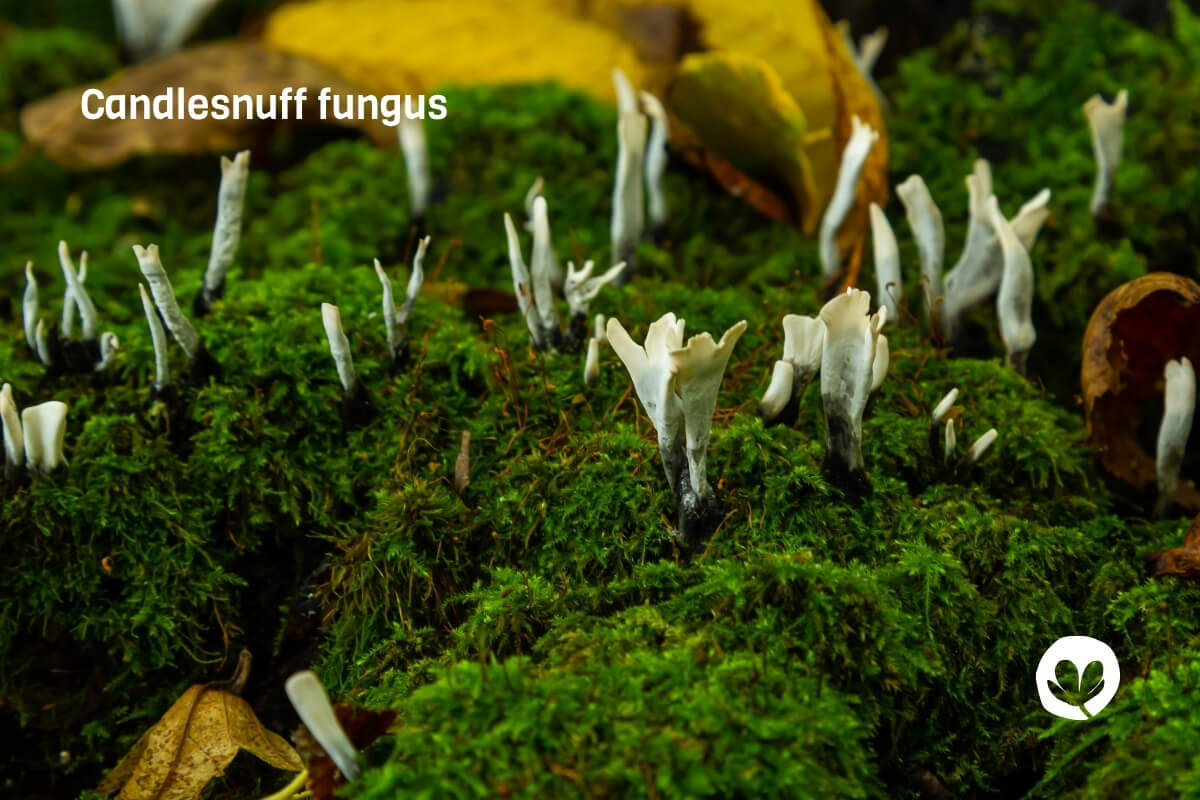
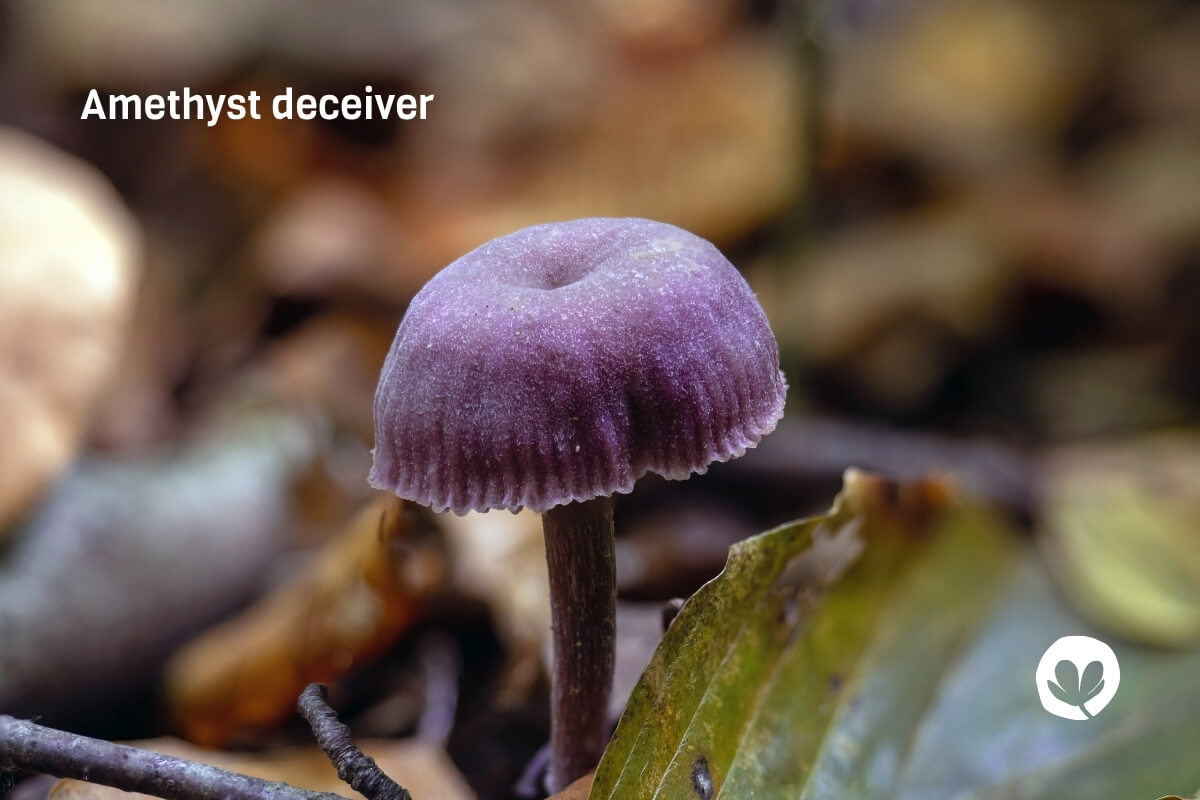
One of our favourite parts of exploring UK fungi is discovering their imaginative common names.
You might encounter:
• Candlesnuff, which looks like tiny blackened candle wicks with pale tips growing on rotting wood
• Collared Earthstar, which opens into a star shape around a central spore sac
• Common Bird’s Nest, tiny cup-shaped fungi containing structures that look like miniature eggs
• Amethyst Deceiver, a striking purple fungus that often becomes paler as it ages or dries
• Yellow Brain, a bright yellow-orange jelly fungus often seen on dead wood
• Dead Man’s Fingers, dark finger-like fruiting bodies growing from dead and buried wood
Before you head outside, you might try reading a few of these names to your child.
Ask them to imagine what a “bird’s nest fungus” or an “earthstar” might look like.
When you look at photographs or spot them on your walk, you will often find that nature has come up with something stranger than you expected.
7. Spot the Classic Storybook Toadstool
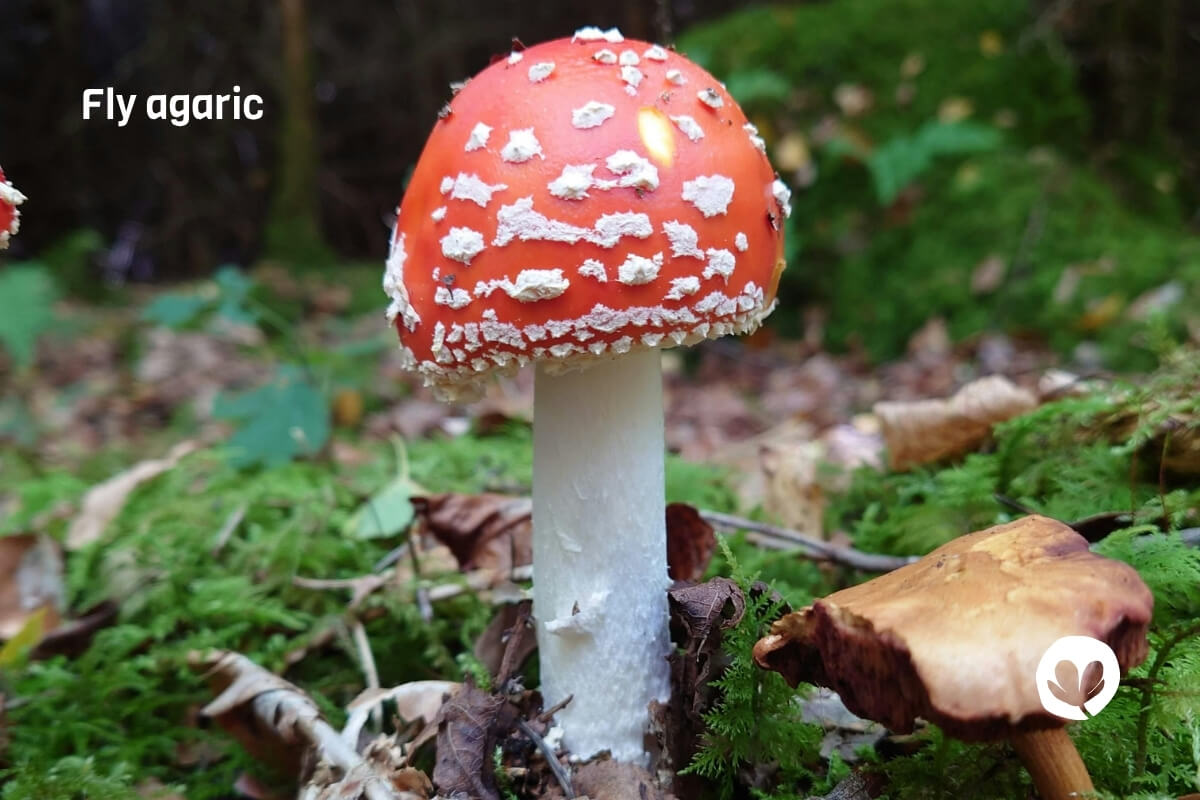
If you ask a child to draw a fairy-tale mushroom, they will often sketch a bright red cap covered in white spots.
This iconic fungus is very real.
It is called Fly Agaric and is native to the UK.
It fruits from late summer into early winter and is often found in woodland and heathland, particularly near trees such as birch, pine and spruce.
Fly Agaric is another mycorrhizal fungus, living in partnership with tree roots underground.
What we say to a younger child
“The red-and-white mushroom from our storybooks is real. It often grows near certain trees because the fungus and the tree are helping each other underground.”
Fly Agaric is poisonous if eaten, so on family fungi walks we leave it where it is and stick to looking and photographing rather than handling it.
8. Make a Fungi Colour Swatch
Fungi are not simply brown and white.
If you look closely, you can find a whole palette of seasonal colours:
• Bright yellows and oranges, like Yellow Brain or Orange Peel fungus
• Rich purples, like Amethyst Deceiver
• Brilliant scarlet, like Fly Agaric
• Soft pinks, greys and even greenish hues
We love taking photos of colourful fungi we find.
At home, your child can print them out or use them as inspiration for painting their own colour swatches.
For children who prefer movement over writing or drawing, simply arranging the photos on a screen from lightest to darkest, or matching paint cards to the photographs, is a low-pressure way to explore seasonal colours.
9. Revisit a Fungi Friend
Fruiting bodies often do not last very long.
If you have a path you walk regularly, find a visible fungus or a cluster of brackets on a log and make them your “fungi friend.”
Take a photo on your first visit, then check back in a few days.
You might observe:
• Has it grown larger or opened its cap?
• Has the colour shifted?
• Has it begun to dry up or collapse?
• Have new little neighbours appeared next to it?
This helps show children that the mushroom is a temporary fruiting body.
The fungus itself often continues growing as hidden mycelium in the soil, wood or leaf litter after the mushroom has disappeared.
What we say to a younger child
“The mushroom might disappear, but much more of the fungus may still be hidden in the soil or wood.”
Meeting Children Where They Are
If your child does not want to touch, draw or get too close to fungi, they do not have to.
Nature connection does not require physical contact to be meaningful.
Fungi activities work particularly well at a distance.
Your child might prefer to:
• Spot them through the zoom lens of a camera or phone
• Point them out from the path
• Count how many they can see from a comfortable bench
• Draw their own imaginative versions at home based on photos
For many children, knowing they will not be pushed to touch something unfamiliar or damp makes the invitation to explore feel much safer and more enjoyable.
You do not need to walk kilometres either.
Spending five unhurried minutes looking closely at a single fallen log can reveal fungi, mosses, insects, lichens and patterns that you might otherwise walk straight past.
Take the Autumn Exploration Further
If you would like to bring these sensory, low-prep nature activities into your home, we have put together resources designed specifically for unhurried family learning.
The Nature Curious Autumn Digital Pack is available to download and print at home, featuring our hand-drawn autumn fungi hunt alongside other gentle, interest-led activities.
For a complete offline experience, the physical Nature Curious Autumn Box contains the same hand-drawn activities, printed guides and materials and is delivered directly to your door here in the UK.
Both options contain the same educational activities, so you can choose the format that fits best with your family’s routine.
Which of these little autumn worlds does your child tend to gravitate towards first: the science, the folklore stories or simply finding the strangest shape on the path?
Further Reading and Field Guides
If fungi become a lasting interest for your family, we recommend exploring:
• The Woodland Trust’s online guides to UK fungi, lichens, mushrooms and fairy rings
• The Royal Horticultural Society resources on fungi in gardens, including decomposer fungi, mycorrhizal fungi and fairy rings


